
Empowered Humility
Leadership transitions can be occasions for confusion, disorientation, and even rivalries. This is not news to many of us who can point to instances where transitions have gone badly, not least in narratives like Saul and David in the Bible.
However, in the case of CTS, I am glad to say that we have much to celebrate. The transition has been God-honouring and dignified for everyone involved. We are thankful that it has displayed God’s grace and providential care in ways we could not have imagined.

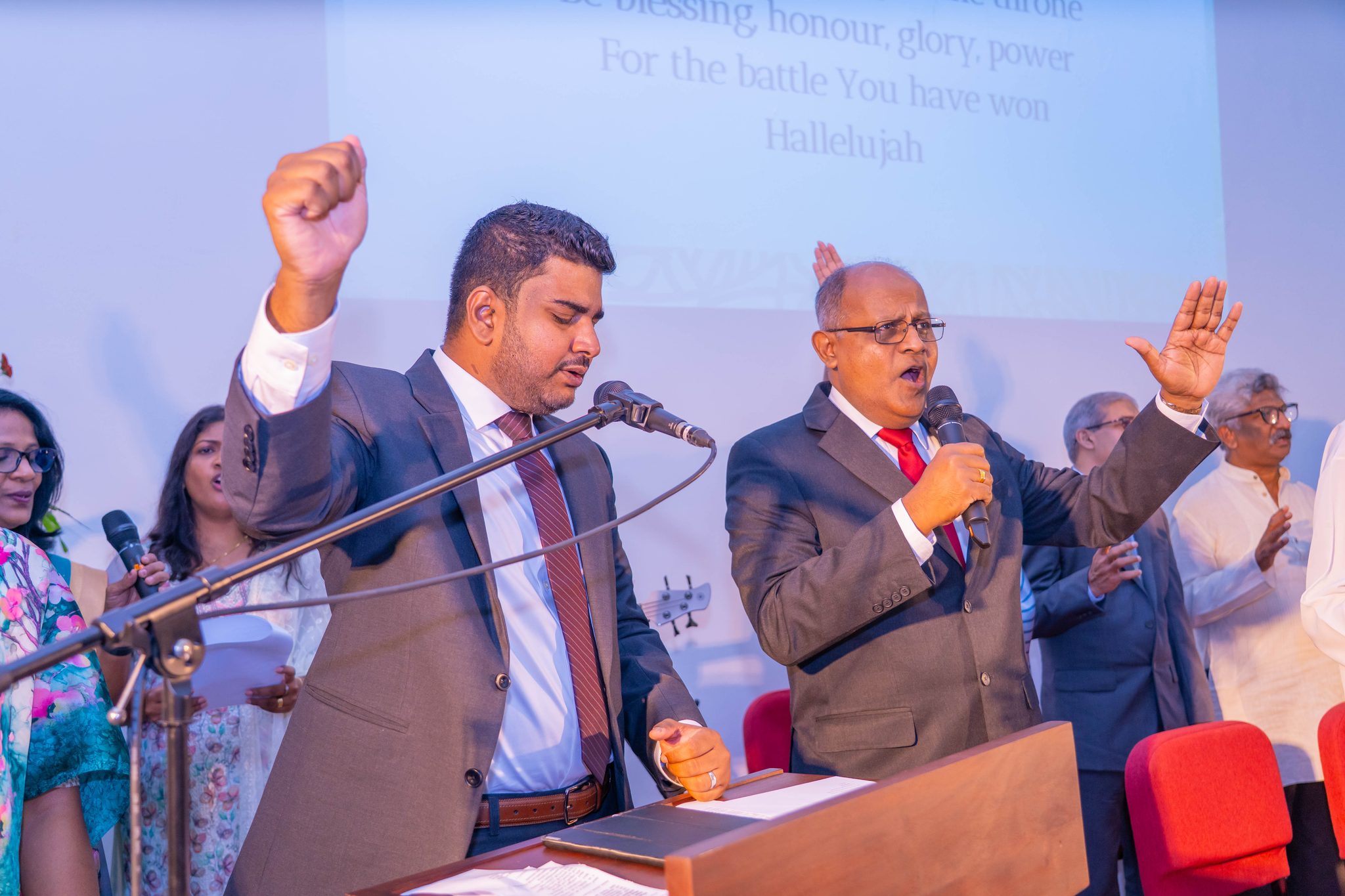
The induction service for the new Principal, held on 26th March, is a microcosmic picture of this very thing I am describing. It was a profoundly moving service that was a beautiful blend of gratitude for what the Lord has done at CTS and a feeling of curious excitement about what He will do in the future. It was especially a privilege to have many church and denominational leaders, council members, faculty members, students, staff, and partners in attendance at the service, both in person and via livestream. It was a great occasion to reaffirm that CTS exists for the Church and its mission in the world.
I owe much of my gratitude for a smooth and wholesome transition to my predecessor, Dr Ivor Poobalan. Dr Poobalan has exemplified a high standard of integrity and humility in his leadership and we congratulate him on having completed 27+ years of exemplary and fruitful service as Principal at CTS. We, as a CTS family, have no doubt that Dr Poobalan’s next season of ministry will be an even greater blessing to the local and global Church.
On 1st April, I took office. Leading up to this and since, a passage of scripture that has come to my mind repeatedly as I have thought about my role is 1 Corinthians 4. This chapter is part of a longer argument that Paul is constructing to persuade the Corinthian Christians to stop creating personality cults around leaders. Paul reframes how leaders ought to be perceived — not as personalities to rally around or celebrities to put on a pedestal, but as “servants of Christ and managers of the mysteries of God” (v1). Nothing more, nothing less. Therefore, for Paul, Christians who boast about their leaders reveal a poor understanding of their own richness in Christ – who is the singular source of grace – regardless of ministry calling.
All is gift. Paul reminds leaders that every gift is received: nothing is self-generated.
When Christians set up things and people as idols after their own image (v7), they are showing self-exaltation, not God-exaltation. Gifts become idols when they are not received in humility and are spoken of as entitlements. Rather than boasting about greatness, Paul models the opposite (vv.8-13).
Helping people see who they are in Christ is good stewardship of the gospel and the calling of leadership — revealing God’s mysteries freely and without mediation that all may find the freedom, security, and status that can only be found in Christ. The leader chooses to be last and least so that others can be rich in Christ. The leader creates empowerment, not dependency.
I envision my role, for this new season at CTS, as empowering the gift of people and stewarding the gift of resources so that the ministry of the gospel may speed ahead through CTS. As the Church continues to navigate various national and ecclesial crises, I am convinced that CTS has unique gifts to bring to the Church. I invite you to pray with me that we do just that.
Soli Deo gloria!